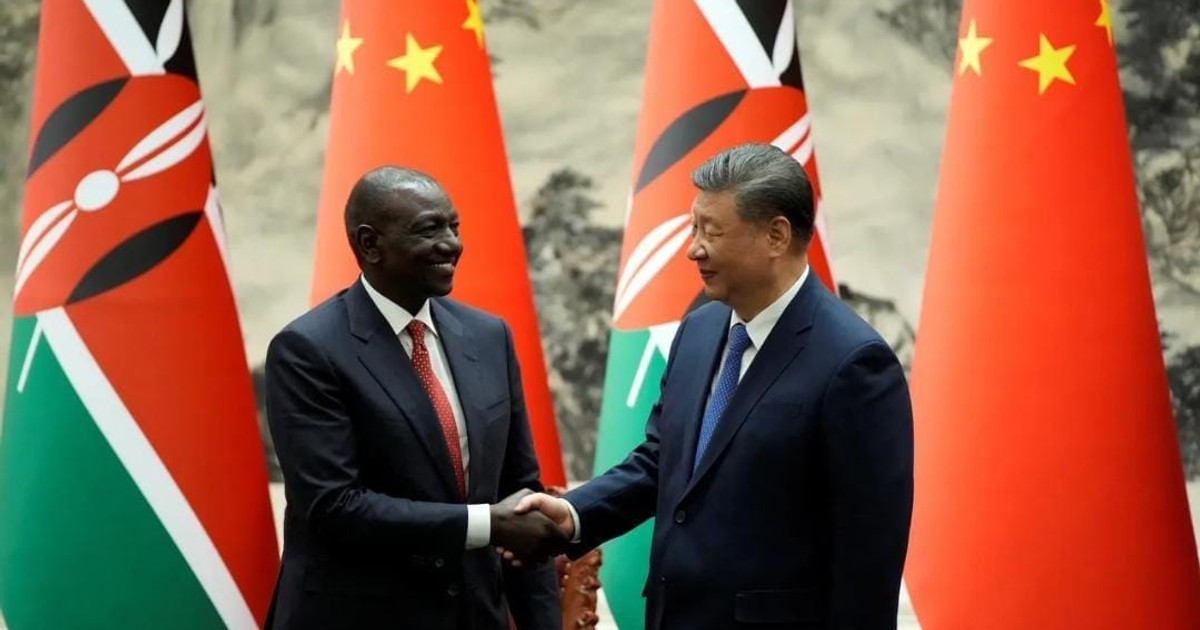
To follow South China Morning PostChina’s deals include the “First Harvest” Economic Partnership Agreement that gives Kenyan exports such as tea, coffee and avocados duty-free and free access to the Chinese market from May.
The agreement is expected to increase export earnings and help reduce Kenya’s trade imbalance with China, where imports exceed imports.
After talks in Nairobi, President William Ruto described the agreements, as well as new memorandums of understanding on agriculture and infrastructure, as a major boost to the economy.
A day earlier, Han marked the first shipment of Kenyan agricultural products under the low-cost plan, calling it a “huge advantage” that helped expand Kenya’s export reach. The shipment follows Beijing’s commitment to treat 53 African countries starting May 1.
US agreements extend to health, minerals and trade
At the same time, Kenya has strengthened relations with the United States through a series of agreements covering health care, minerals and trade.
In December 2025, Nairobi and Washington signed a five-year health partnership worth more than $1.6 billion aimed at strengthening Kenya’s health system.
Kenya is also pursuing partnerships with the United States in mineral exploration and processing to build local value chains and secure critical supply chains.
Likewise, the two countries have resumed negotiations on a comprehensive trade and investment agreement to expand market access and reduce trade barriers.
Infrastructure projects ensure regional connectivity
Outside of trade, Chinese-backed investment continues to support Kenya’s infrastructure development.
Key projects include the extension of the Standard Gauge Railway (SGR) from Naivasha to Malaba and the main Rironi-Mau Summit Road, both of which are important in connecting the region.
The $5.4 billion SGR expansion is intended to connect the Port of Mombasa with landlocked markets such as Uganda, Rwanda, South Sudan and the Democratic Republic of Congo, strengthening East African trade corridors.
Balancing opportunity and debt pressures
However, critics say the serious commitment represents a delicate balancing act.
Kenya spends about $1 billion annually to service China’s debt, raising concerns about long-term sustainability even as new investment continues to flow.
“Kenya regards the completion of the train to Kampala, Uganda, as critical to its financial success,” said David Shinn.
Africa is raising global competitiveness
China sees Kenya as an important strategic partner and is keen to maintain strong ties as it competes with the United States for influence on the continent.
Analysts say that this competition continues to benefit African countries, and governments are using the competition between China, the US and other global players to negotiate better business practices, attract investment in infrastructure and consolidate different partnerships.
“Kenya is punching above its weight because the superpowers are competing for special deals with Nairobi,” said Tim Zajontz, adjunct professor at the University of Freiburg, speaking to South China Morning Post.
#Kenya #secures #China #trade #deals #railways #rising #USChina #rivalry #Africa