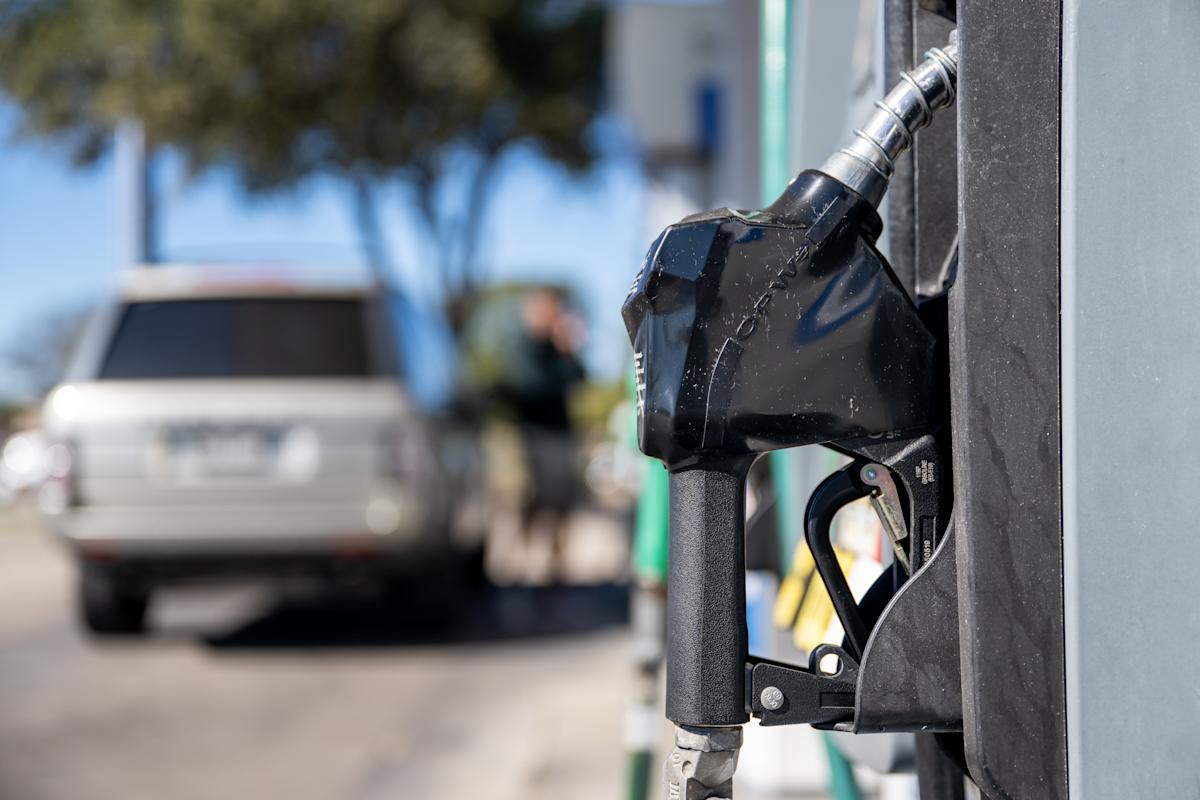
Oil and gas prices are rising as the Strait of Hormuz remains largely closed due to the Iran conflict, raising concerns at home about the cost of fuel at the pump.
The national average for gas prices rose this week to more than $4 a gallon, and diesel prices hit $5 a gallon — the highest level since 2022, according to AAA data.
Oil prices have increased since the start of the Iran war, with the benchmark US West Texas Intermediate crude futures (CL=F) and Brent crude futures (BZ=F), an international benchmark, jumping above $100 a barrel for the first time since 2022, when Russia launched its invasion of Ukraine.
Following these observations, the shipping giants have suspended operations and rerouted ships that were originally intended to sail through the Strait of Hormuz – an important route for transporting oil worldwide, as approximately 20% of the world’s oil supply passes through it every day. Disruptions to this road could quickly affect global oil prices.
Analysts have warned that a protracted war with Iran could push up energy prices and that supply disruptions would have a real impact on fuel costs.
“This is something that will start to affect gas prices starting today,” Patrick De Haan, head of oil analysis at GasBuddy, told Yahoo Finance after the first attack on Iran. We could see gas prices around lunchtime or in the evening starting to go up as gas stations are being notified of a big drop in the price they’re paying.”
This comes at a time of seasonal increases in gas prices, De Haan said, as most of the country has begun the transition to cleaner, more expensive summer gasoline types.
The impact of the season, as well as “the attacks on Iran, will certainly lead many drivers to see higher gas prices here, not in the next few days, but in the next few weeks, if not two or three months.”
Read more: 5 ways oil prices over $100 a barrel can hit your wallet
Although the US is technically the world’s largest oil producer, accounting for 22 percent of global oil production, the Middle East has a larger share, accounting for nearly a third of global oil production, and Iran is one of the top 10 oil producers.
The biggest risk to oil prices is the Strait of Hormuz, according to De Haan. Located between Iran and the UAE, the Strait is the world’s most important route for the distribution of oil. According to the US Energy Information Administration, about 20 million barrels of crude oil and petroleum products flow through the strait every day.
However, boat traffic has stopped after Iran’s Revolutionary Army issued threats to fire on any ship that tries to pass. Due to the fact that Iran’s oil production accounts for more than 4% of the world’s share, and the border that connects other major oil-producing countries with the rest of the world is close to its border, this type of disruption has the power to shake the world market and cause a severe disruption in the supply of goods.
The US is in the grip of more pressure than it has been since the gas crisis of the 1970s, when oil-producing countries that were part of OPEC imposed sanctions on the US and other nations, causing oil prices to rise and gas shortages. The Iranian revolution in 1979 reduced supply, raising prices even further.
On a larger scale, political tensions could have serious implications for the rest of the world, as oil is bought globally and driven by supply and demand, as well as speculative investors who can drive up prices. This can trickle down to affect the day-to-day wallets of consumers.
See: Who sets oil prices? Inside the wild country of energy business.
Meanwhile, diesel prices have increased by more than 50%, more than the rise in the average price of gas and hit more than $ 5 per gallon. Since the early 2000s, diesel prices have often been higher than regular gas prices due to the high demand for diesel in the United States, the shift to less efficient diesel options, which increased production and distribution costs, and higher taxes on the price of diesel than regular gas.
Even if you drive an electric car, this does not mean that you are risk-free.
Although only a small portion of the population relies on diesel for their vehicles, higher diesel prices can still indirectly affect the daily wallets of Americans. Freight vehicles such as semi-trucks and tankers rely heavily on diesel, which can translate into higher operating and handling costs for companies – costs that can be passed on to consumers.
This means that every time you buy something, the cost of transporting it from the manufacturer to your front door or the shelves of your supermarket increases.
Read more: Shipping costs are rising as fuel prices skyrocket
Heavy machinery used in agriculture and construction equipment also rely on diesel, which can raise production costs in various industries.
So far, the Trump administration has taken steps to reduce the burden of rising energy prices by ordering the release of 172 million barrels of oil from the US Strategic Petroleum Reserve earlier in March. This decision was made together with 32 countries that are members of the International Energy Agency, which have agreed to release 400 million barrels of oil from their emergency reserves to the market to solve the global crisis.
However, the announcement of this release is expected to take 120 days, which may mean that it will take time for the impact of this decision to be felt by everyday consumers.
Some measures, such as fuel tax holidays, have been passed by lawmakers as a way to cut costs by temporarily suspending state or federal taxes on fuel. Similarly, subsidies and rebates may temporarily reduce the cost of fuel at the pump but may result in higher costs for the government.
Ultimately, these steps will be temporary gaps. Reopening the Strait of Hormuz to release the oil supply bottleneck would be a quick and long-term solution to lower oil and gas prices.
However, it is not known when the conflict will end, and oil tankers will be able to enter and exit the route they used to travel.
Read more: What is the Strategic Petroleum Reserve, and can it help lower gas prices?
As of now, the average national price of regular gasoline remains at $4.018, from $3.977 last week and $2.982 last month, according to AAA.
It is difficult to predict exactly how gas prices will move in the coming days, weeks and months; however, customers should keep abreast of changes in oil prices, official OPEC announcements, US sanctions or policy changes, and shipping operations to see if their daily costs may continue to be affected.
In the meantime, there are also moves you can make to save money when you top up.
-
Fill up now if prices keep going up: Don’t wait for prices to keep going up. If you have an empty tank, fill up now to take advantage of the very low price.
-
Use gas price comparison tools: Finding the cheapest gas price in your area is easy with tools like GasBuddy and Gas Guru. Sometimes, taking a few extra minutes to compare prices in your area can save you a few cents per gallon.
-
Join a fuel rewards program: Being loyal to a particular gas station can help you get discounts on every gallon of gas.
-
Reduce discretionary driving: Carpooling, cycling and walking can help reduce discretionary driving and lower fuel costs during spikes.
See: How to find the best credit card to save on gas
#Gas #diesel #extended #war #Iran #raise #prices