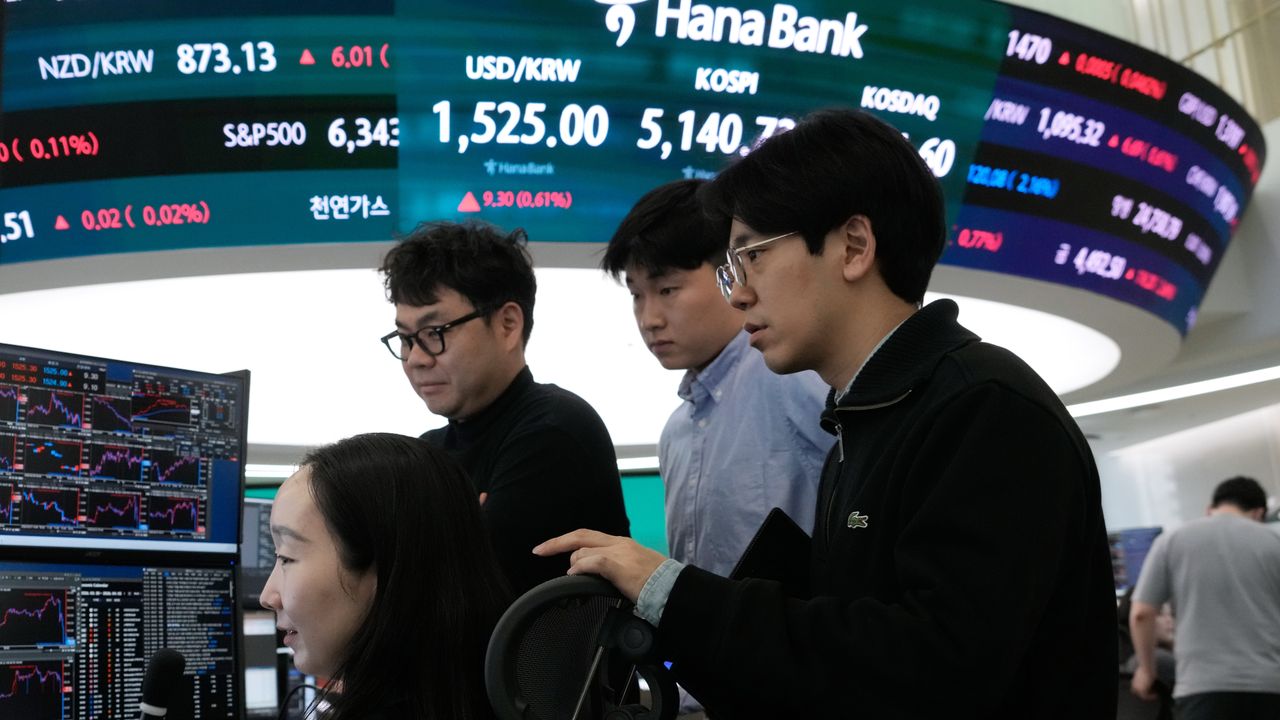
Clouds are gathering around the world’s financial markets as the US war against Iran enters its fifth week and oil prices are increasing along with many types of products that depend on oil and gas such as fertilizers.
Even before the war, there were growing concerns about the stability of the financial system. This is focused on supporting large investments in AI data centers and a private credit segment to finance software firms that may find their business processes adversely affected or disrupted by the development of AI-based tools.
In the first few weeks of the war, financial markets, supported by President Trump’s claims that it will be over in a few weeks and the US has already achieved “victory,” did not have major movements. There was certainly nothing similar to the changes that took place in April last year when Trump unveiled “retaliatory tariffs” against the rest of the world.
In an attempt to calm the markets, Trump has said that negotiations are ongoing, that Iran is eager for a deal and that the war will soon end. But as preparations for a major offensive involving the use of ground troops become more apparent, these efforts are weakened.
As an article on Wall Street Journal it says, “traders say they are increasingly underestimating the words of leaders because of information such as military organizations.” Or, as another reviewer mentioned by Financial Times (FT) said: “Markets may start paying more attention to the White House and more to the lack of energy on the ground.”
The market’s reaction to Trump’s announcement last Thursday that he was extending his deadline for strikes on Iranian facilities signaled a change in direction. The S&P 500 fell 1.7 percent, bringing its losses to 7 percent for the month. The NASDAQ and Dow both fell 10 percent from their highs, putting them in what is known as a correction zone. Every component of the S&P 500 is in the red except for energy and oil.
Equally important has been the fall in bond prices, bringing their yields higher. Gold fell again indicating that some investors were selling the metal to cover losses incurred elsewhere.
The traditional balance of the portfolio is 60/40, which is 60 percent and 40% bonds, but this combination had the worst month since September 2022 when the Fed started raising interest rates from near zero levels, to which they had been lowered when the COVID-19 crisis began.
The $30 trillion US Treasury market, which forms the core of the global financial system, is reportedly showing signs of stress as the battle rages amid signs of a tightening financial crisis.
This is reflected in the size of the market leading businesses. In the water market, even a large business does not have a large effect, which is similar to the small effect of dropping a stone into a deep pool. But according to JP Morgan Chase, most of the businesses that drive prices, called “market depth,” have fallen by about half since Trump’s “freedom day” tariff announcements.
Commercialization and suppression of markets is a global phenomenon. The MSCI All Country World Index, which tracks both developed and so-called emerging markets, has fallen 9 percent since the war began. The index of government and commercial bonds fell by 2 percent.
The rise in bond yields is putting pressure on the already stretched budgets of European governments.
The FT reported that government bonds in the euro area “are headed for one of their worst months in a decade, pushing borrowing costs to multi-year highs as investors fear the impact of the Iran crisis on the region’s public finances.”
In a speech last Friday, the leading member of the European Central Bank’s (ECB) board, Isabel Schnabel, said that “the trend of inflation is back” when the change happened sooner than “many people” expected. He said the ECB would not “rush into action” but would assess the details of secondary inflationary effects. In the language of central banks that means that rates will be raised in response to wage problems by workers affected by the impact of their wartime living conditions.
As market volatility increases, more and more questions are being asked in finance: what could cause a crisis, perhaps deeper than 2008? One option is the private credit market, which has grown exponentially over the past decade and a half. It has more than quadrupled in size since 2010 and is now estimated at $2 trillion.
It has come into focus because of the failures of many high-profile firms in terms of redemptions from investors who want their money back. Blue Owl, one of the most recent private highfliers, set the ball rolling last November when it reduced redemptions and tightened restrictions in February.
It has been followed by BlackRock, Apollo Global Management among others. The concern was sparked by the collapse of auto-linked firms Tricolor and First Brands that were found to have close ties to private equity firms. It has inspired JP Morgan head Jamie Dimon that where one cockroach is found it means there are more.
Concerns have been fueled by heavy private debt investment in software companies whose business models are under serious threat from the development of artificial intelligence. Global financial firm UBS has estimated that more than a quarter of the private credit market is exposed to firms at risk of moving through AI.
There are signs that vulture financial firms, which seek to collect cheap assets during recessions and crises, are smelling blood.
On Monday, the FT reported that one of these firms, Strategic Value Partners, which manages $21 billion in assets, wants to move. The company’s founder Victor Kholsa told the newspaper that it was “the biggest opportunity since 2008.”
The founder of one such firm said: “This is not about a few bad loans…
Back in November, the founder of investment firm DoubleLine Capital, Jeffrey Gundlach, said the US equity market was the “lowest life” he had seen in his entire career.
“The next big problem in the financial markets will be private debt. It has the same pitfalls as the subprime mortgage repackaging that happened in 2006,” he said to Bloomberg.
Others come to the same conclusion. This month a survey of global financial managers by Bank of America found that 63 percent identified private equity and credit as a potential source of financial crisis.
In Friday’s edition, the FT focused on the “distribution of private debt,” which points to a pile of redemption requests, exposure to threatening software companies, the prospect of high interest rates hitting property values and revealing some of the trends, problems with the stability of credit ratings and real value. The Middle East could make the situation worse.
It said that what it called “recent negative headlines” should “mark the beginning of a radical change.” But considering the financial history and the fact that nothing important has been done to deal with the causes of the crises that broke out in 2008 and again in March 2020, the only conclusion that needs to be made is that the chances of that are zero.
#storm #cloud #gathering #global #financial #system