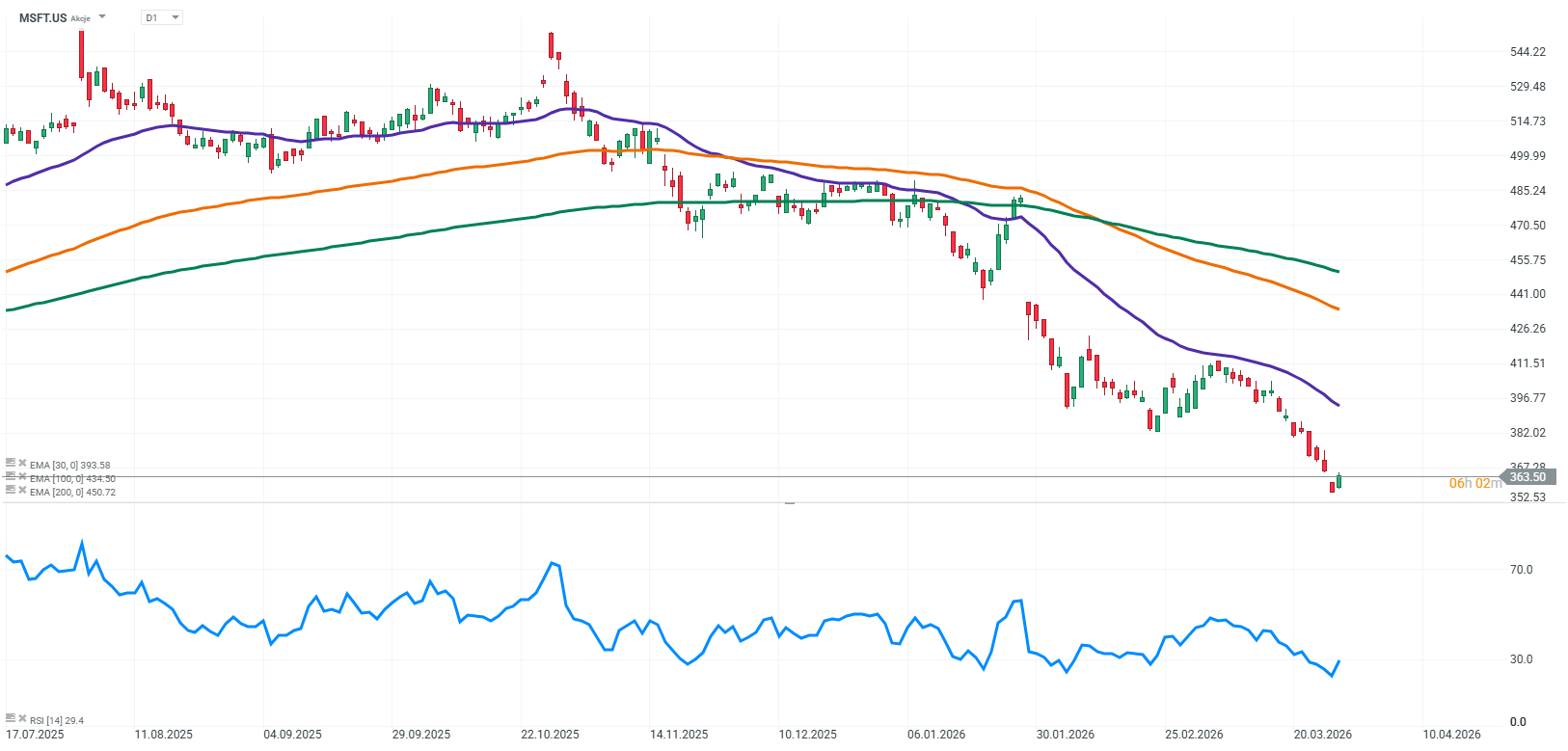
Microsoft is also attracting the attention of investors with new AI developments, which shows that the company is keeping its pace in the race to dominate artificial intelligence. The latest step is the launch of Explain, a research tool that combines several AI models, including GPT and Claude, to provide reliable and verified answers. This method reduces the risk of so-called “AI hallucinations,” where artificial intelligence produces answers that make sense but are wrong or completely fabricated. This phenomenon is particularly important in business analysis, where inaccurate information can lead to wrong strategic decisions.
These actions are part of Microsoft’s broader strategy, which is evolving from integrating AI models into existing products to building a complete ecosystem of tools, agents and enterprise services. Expanding Copilot’s operations, developing an environment for advanced analytics, and strengthening Azure and Foundry infrastructures demonstrate the company’s efforts to ensure how AI is used in office work, data analysis, and business operations.
For the markets, the speed of monetization of this strategy is still an important issue. Microsoft benefits from large scale, a strong position in the enterprise segment, and broad distribution channels through Windows, Microsoft 365, and Azure. At the same time, increased spending on data centers, computing power, and AI model development may be difficult for some time before the effects fully translate into revenue. Market behavior is mixed, as new AI features alone no longer provide strong responses. Investors are focused on questions about the adoption of virtual reality devices, whether companies are willing to pay higher fees, and whether Microsoft can maintain profits in a time of rising infrastructure costs.
In this context, the launch of Critique can be seen both as an attempt to maintain a competitive edge and an expansion of the existing AI environment. Microsoft emphasizes that AI is a core part of its ongoing development. Successfully integrating Copilot’s functionality, agent capabilities, and Azure infrastructure can contribute to future revenue growth. At the same time, if the pace of investment exceeds the use of real resources, the property may remain under pressure despite long-term capacity.
For long-term investors, Microsoft remains one of the primary avenues for exposure to AI, albeit with risk. The company has a large business, protecting the core while at the same time operating in high-end areas. This scenario generally works well in the long term but needs to consider the short-term volatility associated with investments, investments, and the pace of AI business.
Broadly speaking, the latest announcements don’t change Microsoft’s investment story much but confirm that the company is strengthening its position in AI. In the current market environment, translating technological advantages into sustainable revenue and profit growth is more important than the number of new units. In this context, Microsoft is always in a good position, with financial results, rather than reporting, set to be the most important option.
Source: xStation5
This content is created by XTB SA This service is provided by XTB SA, which has its registered office in Warsaw, Prosta 67, 00-838 Warsaw, Poland, entered in the register of entrepreneurs of the National Court Register (Krajowy Rejestr Sądowy) managed by the District Court for the Capital of Warsaw, XII Commercial Division State Court number KRS0170 State Court number KRS0170 015803782 and Tax Identification Number (NIP) 527-24-43-955, with fully paid share capital in the amount of PLN 5.869.181,75. XTB SA carries out business activities in accordance with the license issued by the Polish Securities and Exchange Commission on 8th November 2005 No. DDM-M-4021-57-1/2005 and is controlled by the Polish Supervision Authority.
#Microsoft #Phase #Market #Focus #Adoption #Benefits