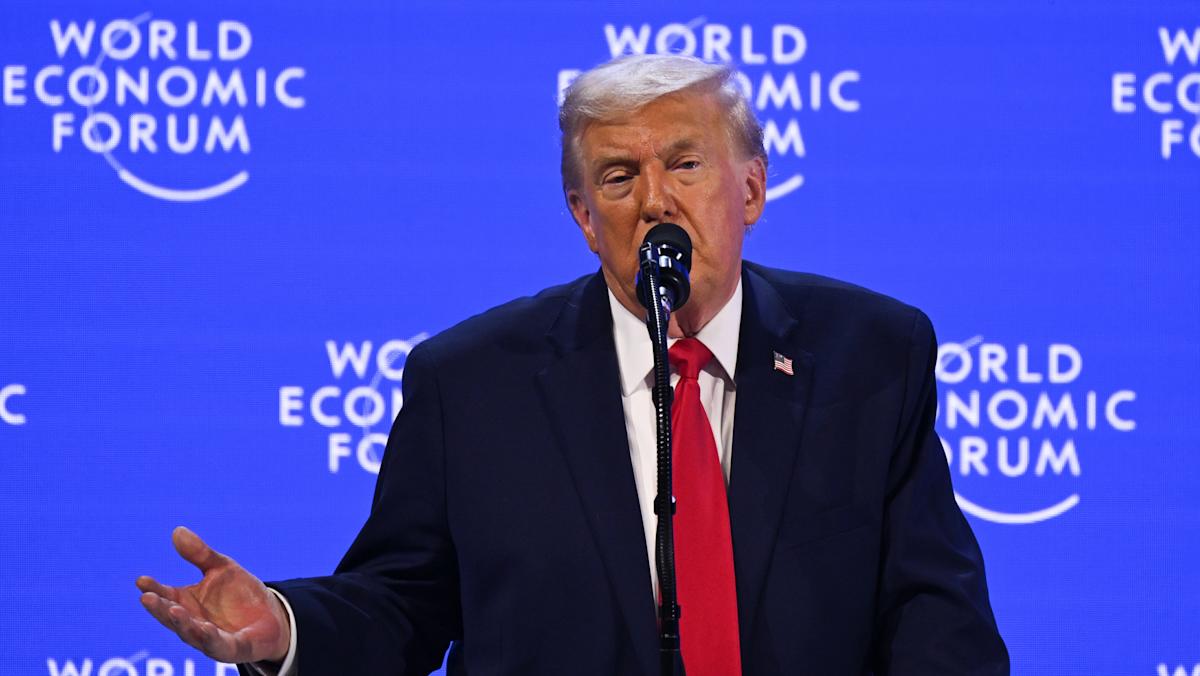
What a difference war makes. In January, President Donald Trump boasted to G7 leaders and others at the World Economic Forum in Davos that his team had “beat” inflation in the US (1)
“Grocery prices, energy prices, transportation, mortgages, rents and cars are going down, and they’re going down fast,” he said.
At that time, US inflation stood at 2.4% annually, compared to 2.7% overall in 2025 (2). When President Joe Biden left office, inflation stood at 3% (3), down from the post-pandemic 9.1% in June 2022, when prices were rising around the world (4).
However, although inflation slowed under Trump, it remained higher than the Federal Reserve’s long-term annual goal of 2% (5).
Now the war between the US and Israel in Iran is expected to make inflation worse, according to a new report from the Organization for Economic Co-operation (OECD).
The OECD predicts that America could have the highest price in the G7 by the end of this year, mainly because of the war and the ongoing impact of Trump’s tax policy.
Here are the inflation forecasts for 2026 for the G7 countries:
-
US 4.2% (from 2.6% in 2025, according to its calculations)
-
UK 4% (up from 3.4%)
-
Germany 2.9% (from 2.3%)
-
Canada 2.4% (from 2.1%)
-
Italy 2.4% (from 1.6%)
-
Japan 2.4% (outbound, down from 3.2%)
-
France 1.8% (from 0.9%) (6)
Some of the basic things that Trump said were cheap are still very expensive. Here is the reason.
The OECD warns that inflation could rise as conflicts in the Middle East disrupt supply chains and normal trade flows. The longer it drags on, the worse things can get.
Trump can no longer claim that energy costs are down. It is an important issue for many Americans.
Gas prices have risen more than 30% this month amid Iran’s seizure of supplies in the Strait of Hormuz (7), and attacks on energy facilities such as refineries, gas plants and oil fields across the Middle East (8). According to a New York Times report, even if the war ends, the price of energy may remain above the pre-war base for months, due to the destruction of energy resources (9).
What about groceries? As PBS reports, farmers in the US and elsewhere are worried about the prices of the essential components of fertilizer they need to grow their crops, which are often shipped through the Strait of Hormuz (10). This is another reason that grocery costs may rise (10).
The United States Department of Agriculture predicts that food prices will rise 3.6% this year, with grocery costs rising just 3.1%, faster than the 20-year average of 2.6%.
Beef, fish, vegetables, sweets and baked goods are all thought to be more expensive (11).
Read More: 5 Important Investments You Can Make Once You’ve Saved $50,000
The OECD adds that Trump’s tariffs, and related tariffs, are contributing to economic growth.
Although the US Supreme Court ruled that Trump cannot impose tariffs under the International Emergency Economic Powers Act, he still has many tariffs on imports, and other countries have responded by imposing tariffs on US goods.
According to Yale’s Budget Lab, the US currently has an effective interest rate of 10.5%. With the exception of Trump’s 2025 tariffs since they were repealed, it is the highest rate since the Second World War (12).
When he took office in January 2025, the rate was a fifth of that, at 2.3%, according to an analysis from the University of Pennsylvania (13).
Tariffs continue to increase the cost of imported cars, electronics and clothing, according to Yale (14).
Inflation is about equality. But its consequences – slow economic growth – are also worrying.
As the cost of living and borrowing rise, demand and investment fall, affecting businesses and jobs. The Federal Reserve often raises interest rates to help keep inflation high, slowing the flow of money into the economy.
The OECD expects that US GDP growth will slow in 2026 to 2%, compared to 2.9% of the global average (6).
It appears that Trump’s battle with inflation, and its consequences, is far from over.
Join 250,000+ readers and get the best Moneywise stories and exclusive interviews first – detailed information curated and delivered every week. Register now.
We rely only on vetted sources and reliable third-party reports. For details, see us editorial rules and guidelines.
The Wall Street Journal on YouTube (1); US Bureau of Labor Statistics (2, 3); Federal Reserve Bank of Chicago (4); US Federal Reserve (5); OECD (6); Economic Business (7); Bloomberg (8); The New York Times (9); PBS (10); US Department of Agriculture (11); Yale Budget Lab (12, 14) University of Pennsylvania (13);
This article provides information only and should not be considered advice. Offered without warranty of any kind.