New York
The world economy is being held back by the actual closure of the Strait of Hormuz.
The prices of petrol, jet fuel and diesel have gone up. Stock markets have fallen, and the possibility of a recession has increased.
After weeks of trying and failing to reopen the critical waterway off Iran’s coast, President Donald Trump has come up with a new idea: leave and let others clean up the mess.
Trump told the New York Post on Tuesday that the Strait of Hormuz will “automatically open” after the US military pulls out of the war. “Let the countries that use the strait, leave them and open it,” Trump told the paper.
Trump has told aides that he intends to end the US military campaign against Iran even as the Strait of Hormuz remains largely closed, The Wall Street Journal reported on Monday.
“Go get your oil!” Trump wrote in a Public Truth post on Tuesday.
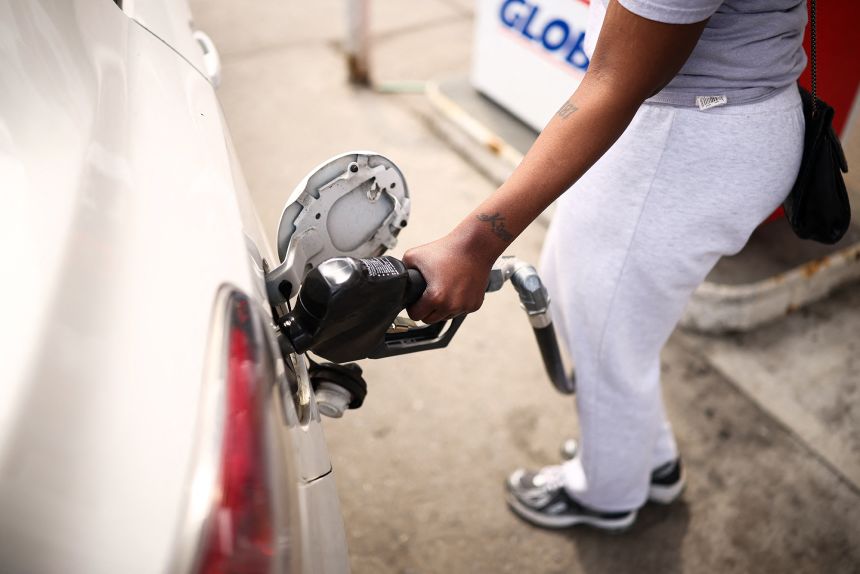
Trump told reporters later in the day that gas prices, which hit $4 a gallon for the first time since 2022 on Tuesday, will drop soon. “What I have to do is leave Iran, and we will be doing that soon, and they will fall to the ground,” he said.
However, energy market experts tell CNN that ending the war without opening the Strait of Hormuz is unlikely to solve the energy crisis.
“It’s a bad idea,” Dan Pickering, founder and chief investment officer at Pickering Energy Partners, told CNN in a phone interview. “This can be a half-baked job that causes more long-term problems than it solves in the short-term.”
While the US withdrawal could cause oil prices to fall in the near future, Pickering said he was “afraid” the world would pay a heavy price for negligence if a “bad actor” like Iran remained in control of the Strait of Hormuz.
“It’s hard to see how throwing in the towel would solve anything. In fact it would be giving in to Iran and guaranteeing higher energy prices because Iran would be free to attack ships and impose tariffs,” Patrick De Haan, head of oil analysis at GasBuddy, said in a telephone interview on Tuesday. “It will be a huge failure.”
It is possible that Trump dismissed the idea of persuading allies to raise support to open a chokepoint, or as a prelude to a possible US attack.
Some investors rejected talk of the US leaving without reopening the Strait of Hormuz.
It’s a sad outburst, like crossing your arms when your mom says you can’t go to the party,” said Art Hogan, chief market strategist at B. Riley Financial.
The fighters in the oil market stress that the disruption of supply – the largest recorded – requires the decision to close the Strait of Hormuz, which about a fifth of the world’s oil flows.
“There’s no way to downsize the global economy and pretend it’s not a problem,” De Haan said.
It is true that the United States is more protected than the countries of Asia and Europe, which depend directly on the Strait of Hormuz for oil.
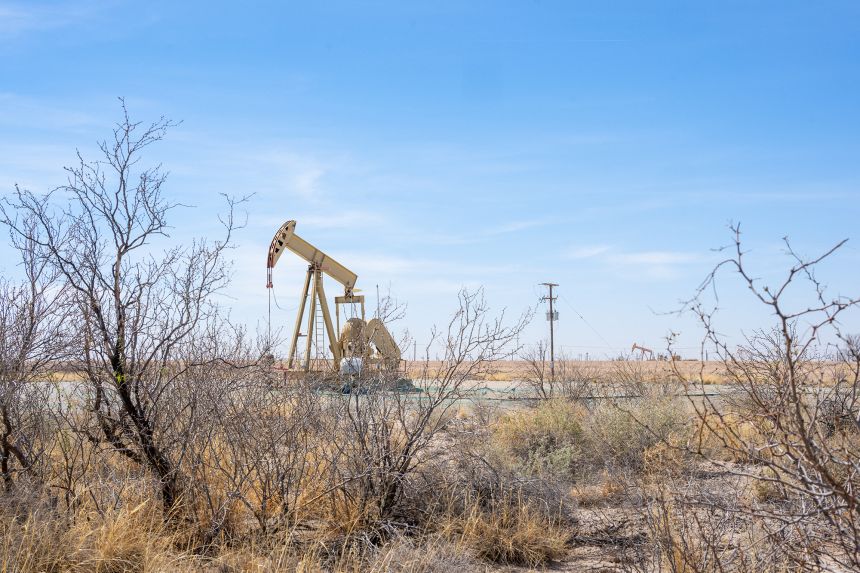
That’s because the United States is the world’s largest oil producer, pumping an all-time record 13.6 million barrels per day last year.
However, the United States is not an independent island. Supply disruptions thousands of miles from central America are being felt by customers at the gas pump.
“We are very much tied to global prices,” said Vikas Dwivedi, global oil and gas strategist at Australian investment bank Macquarie Group.
US refiners don’t just rely on domestic oil to make gasoline, jet fuel, diesel and other energy products that power the economy. Those decades-old refiners often mix ultra-light US oil with heavy crude pumped overseas.
Hundreds of thousands of barrels of imported oil are shipped to the United States every day, mostly along the East and West Coasts.
And in order to meet strong domestic demand, the United States imports large amounts of gasoline, jet fuel, diesel and other energy products.
Chief economist Claudio Galimberti said: “California and New York are dependent on imports and will therefore face shortages as soon as Asia and Europe begin to face them.” research firm Rystad Energy.
If the Strait of Hormuz remains closed more often, buyers in Asia, Europe and elsewhere may turn to US barrels.
A 40-year-old ban on selling US crude abroad was lifted in late 2015, allowing US oil imports to rise by about 400,000 barrels a day to 4 million now, according to government data.
However, analysts warn that higher export demand could raise US energy prices domestically, further reducing the discount at which US oil is currently being bought.
“US producers can’t say, ‘We can’t give you oil because we need to keep the price low here in the US.’ They’re going to sell them that barrel every time,” said Bob Yawger, commodities strategist at Mizuho Securities.
If Iran retains control of the Strait of Hormuz, investors would continue to view the chokepoint business as risky and unstable.
In order to compensate for that risk, they would demand additional returns – known as a geopolitical risk premium – which would keep upward pressure on prices around the world, including at US gas pumps.
Andy Lipow, president of US-based consulting firm Lipow Oil Associates, said: “There will be a lot of political risk in the market because Iran could do it again.”
Perhaps all of this explains why Trump signed as recently as Monday morning that reopening the Strait of Hormuz is a priority.
In a State of the Union address on Monday, Trump said that if the “Hormuz Strait is not opened for business” immediately, we will end our “occupation” of Iran by blowing up and completely destroying their power plants, oil wells and Kharg Island (and possibly all desalination plants!)
Bob McNally, president of Rapidan Energy Group, said that if the United States leaves the Strait of Hormuz and leaves Iran in control, there could be a relief selloff in the price of oil. But it wouldn’t be forever.
“It doesn’t end the crisis,” McNally said.
Events on the other side of the planet are causing financial pain for Americans at home. Leaving the Strait of Hormuz in a precarious position would be dangerous to ignore that painful lesson.
“Everyone involved can say whatever they want and declare victory,” said Macquarie’s Dwivedi, “but until the Strait of Hormuz opens, the problem will continue to grow.”
#Sailing #Strait #Hormuz #gas #cheaper #CNN #Business